Seogwipo Youth Participatory Budget Committee
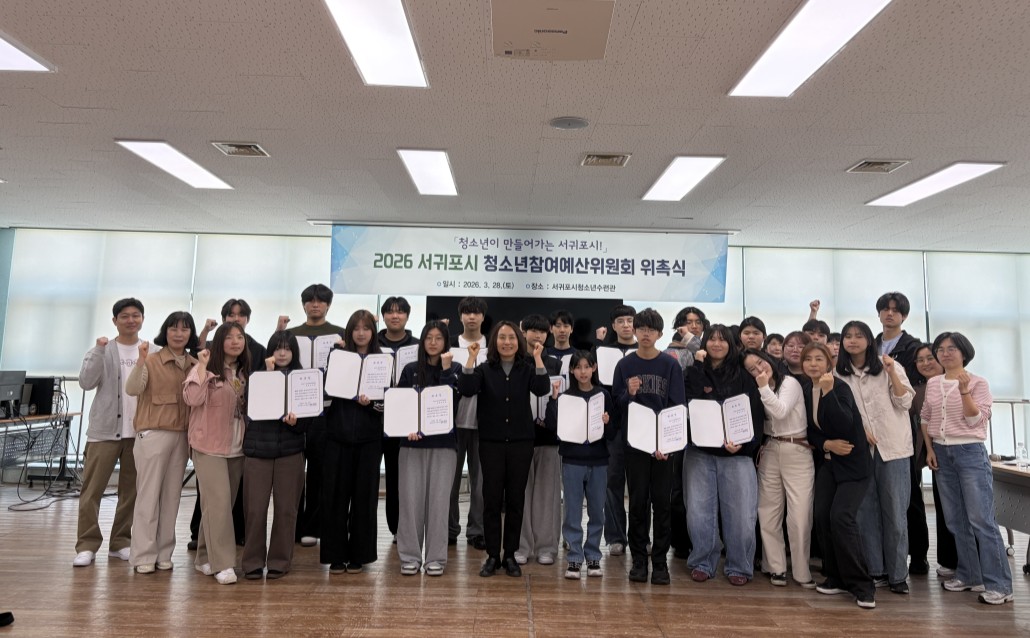
As Chairman of the Seogwipo Youth Participatory Budget Committee, I represented 13 youth centers across the city in local government budget deliberations. I led discussions on youth budget proposals, coordinated representatives from multiple centers, and pushed for youth priorities in municipal decision-making — a process where young people directly influence how public funds are spent.
- Chaired citywide budget deliberations representing 13 youth centers across Seogwipo, coordinating proposals and building consensus among diverse youth representatives
- Won first place in the competitive budget pitch with the "je-ju-ae san-da" project, securing 2.5M KRW in municipal funding for community implementation
- Pushed for youth priorities in local government decision-making, turning youth needs into budget proposals reviewed by city officials
- Received the Seogwipo Mayor's Award for leadership, civic engagement, and contributions to youth participation
"je-ju-ae san-da" — Living with Love for Jeju
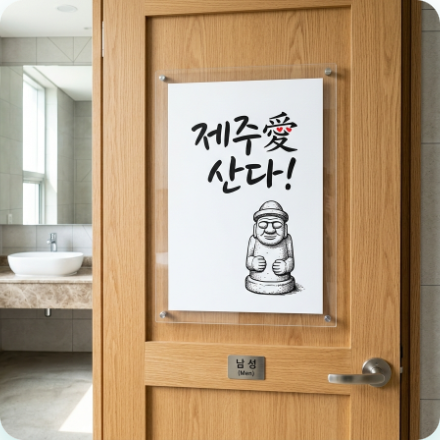
A community initiative to turn public restrooms in Daejeong-eup into cultural micro-spaces by installing Jeju dialect calligraphy panels. The project tackles two problems at once: preserving Jejueo — a UNESCO-designated critically endangered language — and reimagining neglected public infrastructure as sites of cultural identity.
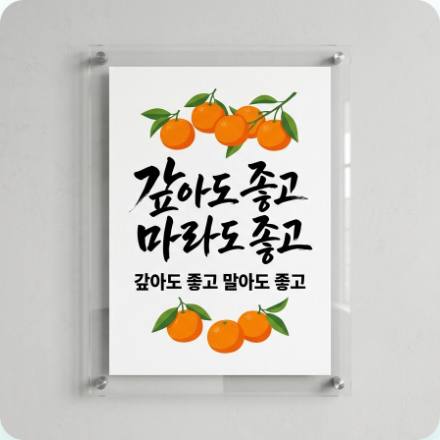
Instead of costly facility renovations, I proposed changing how people experience these spaces. Calligraphy panels featuring Jejueo phrases with standard Korean and English translations go on restroom doors, turning brief pauses into moments of cultural encounter.
The project draws on behavioral economics — nudge theory (warm messages over cold warnings encourage voluntary civic behavior) and the broken windows theory (well-maintained spaces are respected by users). Total budget: 2.5M KRW, with a per-unit cost of just 12,500 KRW per restroom stall.
Daejeong Youth Center Steering Committee
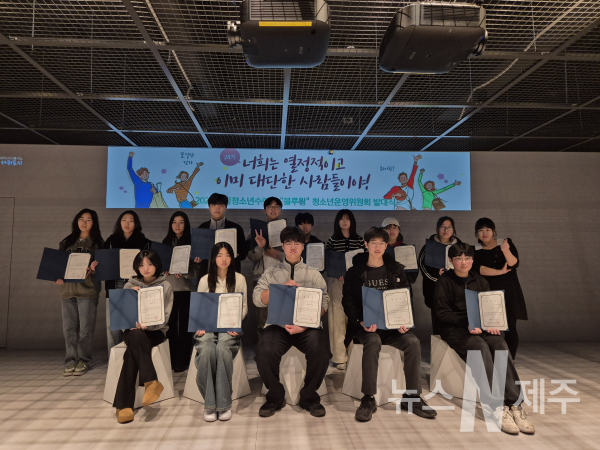
As Chairman of the Daejeong Youth Center Youth Steering Committee, I ran the governing body that organized programs, represented local youth interests, and worked with staff to improve youth services at the center.
This gave me hands-on experience in institutional governance — running regular meetings, planning community events, and serving as the link between youth participants and center administration. The steering committee oversaw the "je-ju-ae san-da" project and set up a long-term maintenance partnership with the Daejeong-eup Community Center for ongoing care of the installed panels.
From Budget Proposal to Community Change
Unlike simulation-based civic experiences, this work had real outcomes. Municipal funds were allocated based on my committee's deliberations, and the winning project went from pitch deck to physical installation in Daejeong-eup's public spaces.
It showed that youth-led governance can produce real community impact with minimal resources. A 2.5M KRW budget — roughly 12,500 KRW per restroom stall — created a scalable model for cultural preservation through everyday public infrastructure, one that other districts could replicate.
- Municipal budget deliberation and public fund allocation
- Multi-stakeholder coordination across 13 youth centers
- Project design grounded in behavioral economics (nudge theory, broken windows theory)
- Community partnership building with local government and cultural institutions