Student Participating in Action, Reform, and Knowledge
I co-founded S.P.A.R.K. because I noticed a paradox in my generation: we know everything about world affairs but walk past problems in our own neighborhoods. The organization bridges that gap — pairing grassroots local action with global perspective across a portfolio of social impact and cultural preservation projects.
S.P.A.R.K. runs on two tracks: Local Projects, where we find and solve neighborhood problems through volunteering and campaigns, and Vox Mundi, an editorial journal where students across 10+ school branches publish analysis of international affairs.
"We have Global Eyes but Local Blindness. We are information giants on world affairs, yet bystanders in our own neighborhoods."
Global Vietnam Wars Studies Initiative & Unseen Legacies
In partnership with the Rajawali Foundation Institute for Asia at Harvard Kennedy School's Ash Center for Democratic Governance and Innovation, I led S.P.A.R.K.'s contribution to two connected initiatives: the Global Vietnam Wars Studies Initiative, which documents first-person testimonies from those who lived through the war, and Unseen Legacies, which archives the records of fallen soldiers.
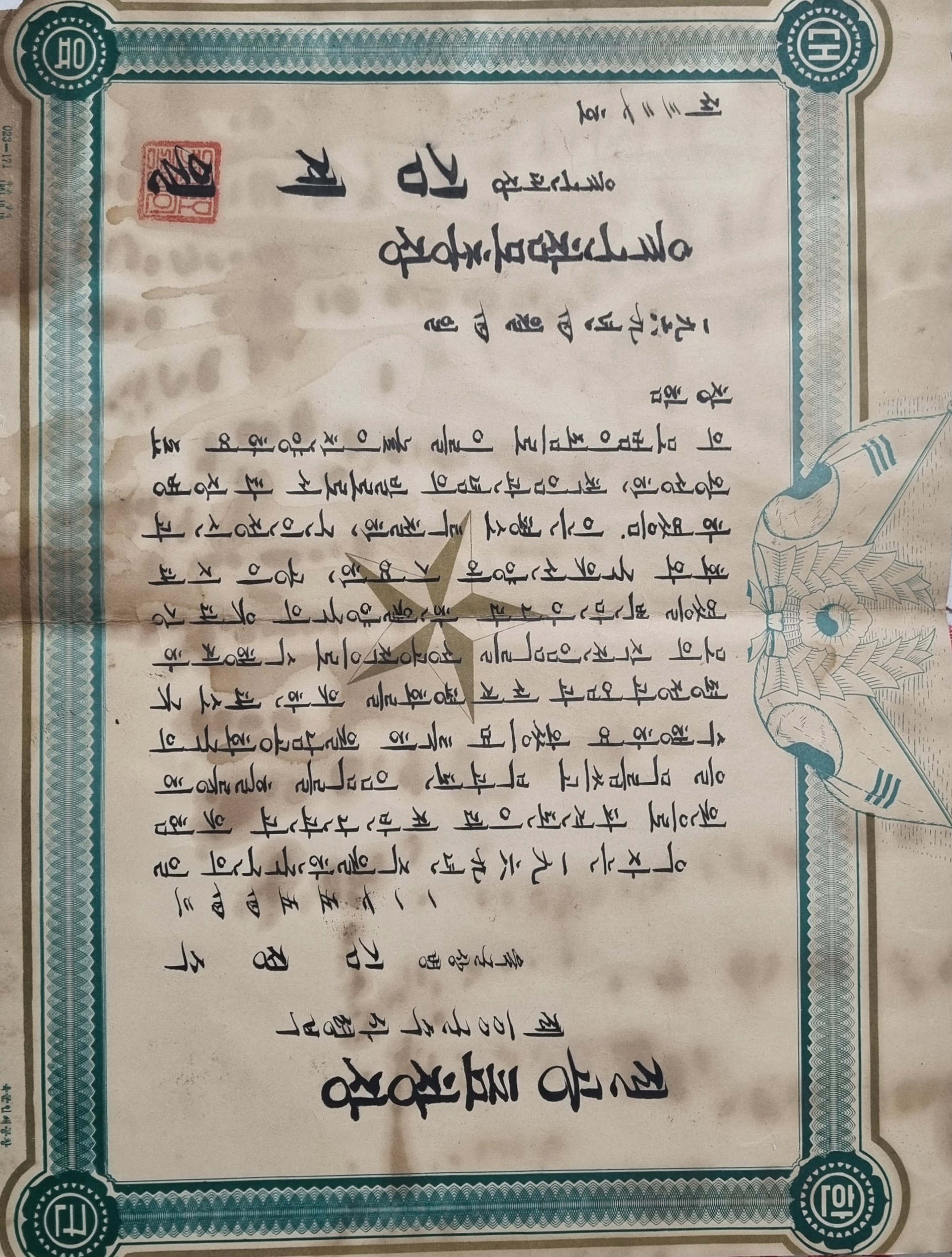
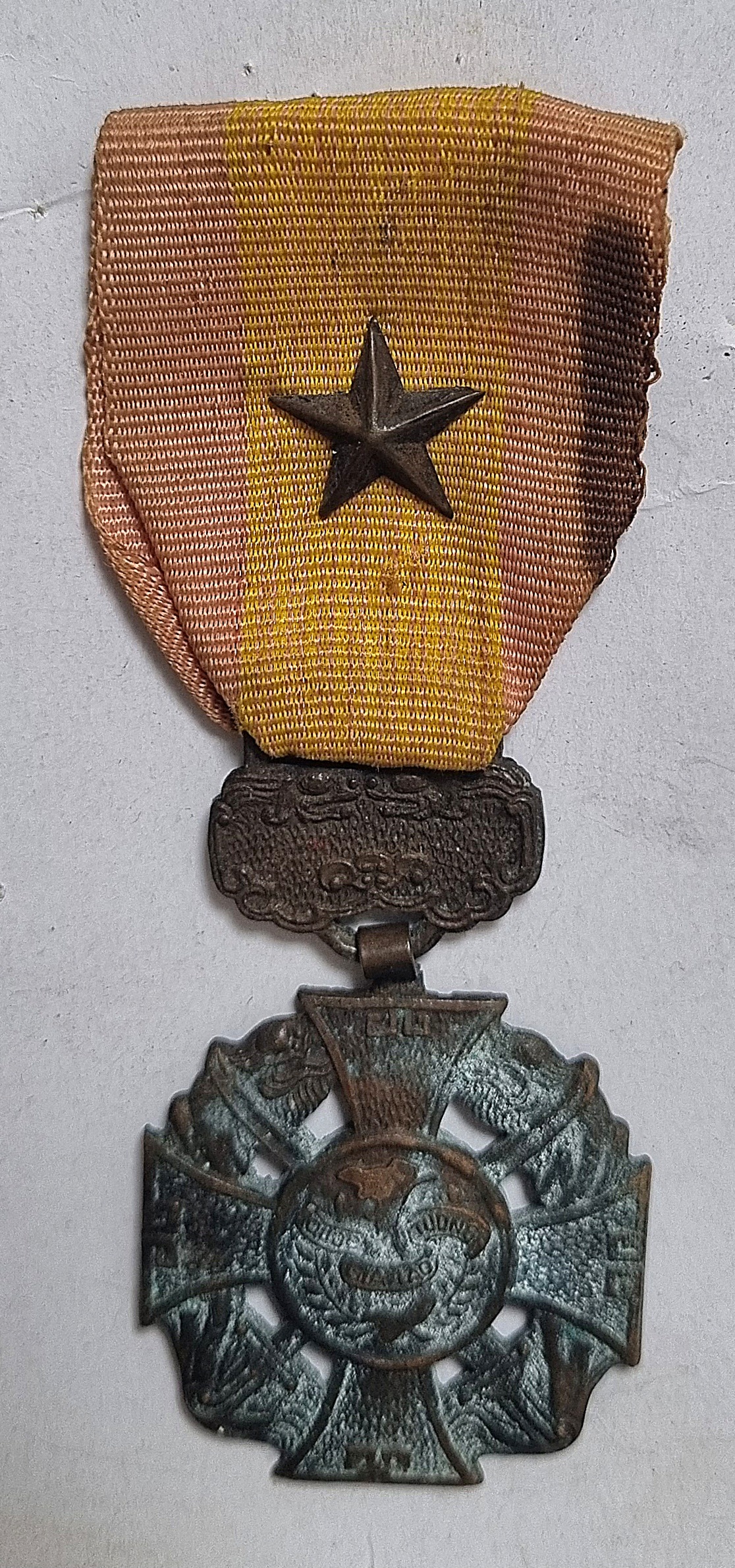
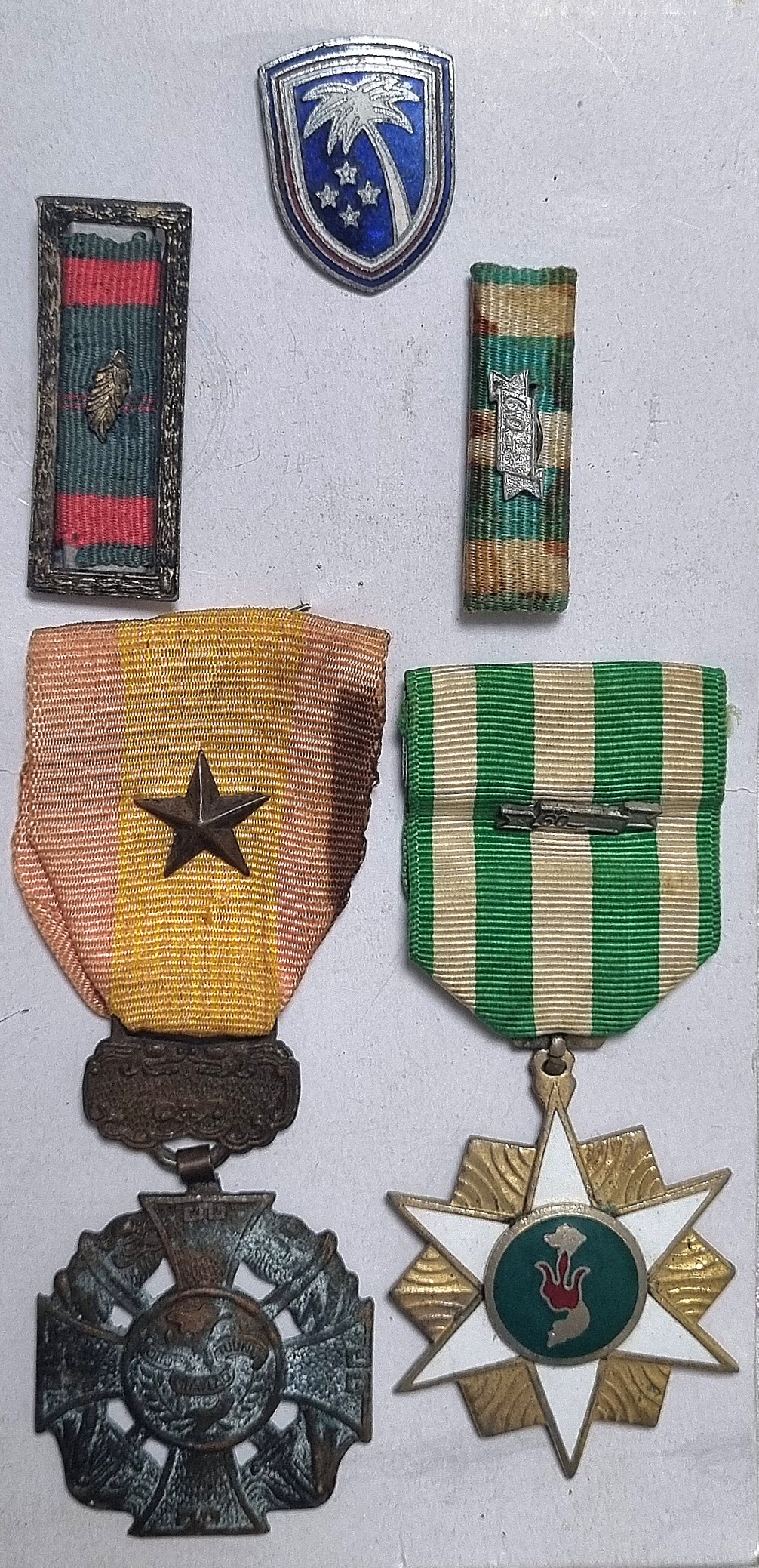
We focused on Korean Vietnam War veterans — conducting oral history interviews and collecting primary source materials including service records, commendation certificates, and military decorations. These materials went to the Harvard Kennedy School research team for the global archive, filling a gap in the English-language historical record of Korean participation in the Vietnam War.
- Partnered with Harvard Kennedy School Ash Center through the Rajawali Foundation Institute for Asia to document Korean Vietnam War veterans' stories
- Conducted oral history interviews with veterans and their families, recording first-person testimonies for the Global Vietnam Wars Studies Initiative
- Archived primary source materials — service commendations, military decorations, and personal records — for the Unseen Legacies digital archive
Traditional Markets Internationalization
Seoul and Gyeonggi's traditional markets are cultural landmarks, but language barriers keep international visitors from fully experiencing them. I led a translation project to make these markets accessible to global audiences — translating menus, signboards, and merchant information while supporting local small businesses.
It goes beyond simple translation: we work directly with merchants to understand their products and write culturally sensitive descriptions that preserve each market's character while making them navigable for non-Korean speakers.
- Led multilingual translation of menus and signboards across Seoul-Gyeonggi traditional markets to improve access for international visitors
- Worked directly with local merchants to create culturally sensitive descriptions that support small businesses and bring in more international foot traffic
Jeju Dialect Heritage Preservation Initiative
The Jeju dialect — classified by UNESCO as critically endangered — is disappearing as fewer native speakers remain. I started a preservation campaign focused on digital archiving and community awareness, pushing for its registration as intangible cultural heritage to protect the island's linguistic identity.
- Started a preservation campaign for the UNESCO-classified critically endangered Jeju dialect through digital archiving and community awareness
- Pushed for cultural heritage registration to institutionally protect the island's endangered linguistic assets
Order with Dignity — Kiosk Accessibility Campaign
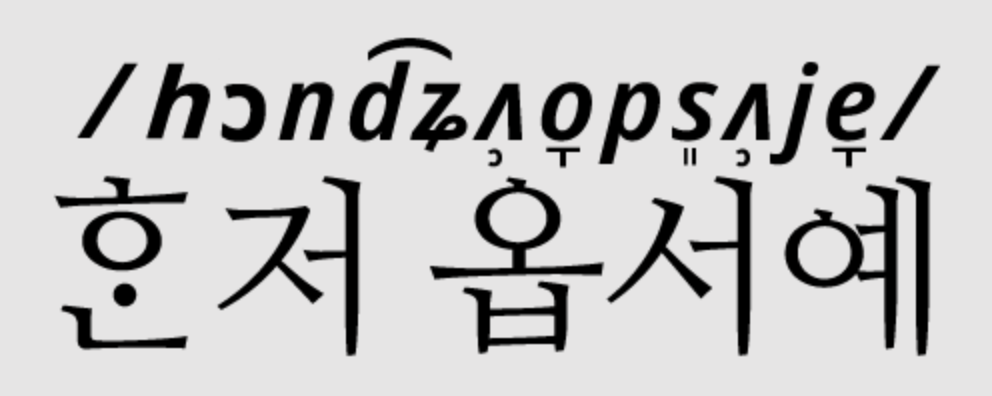
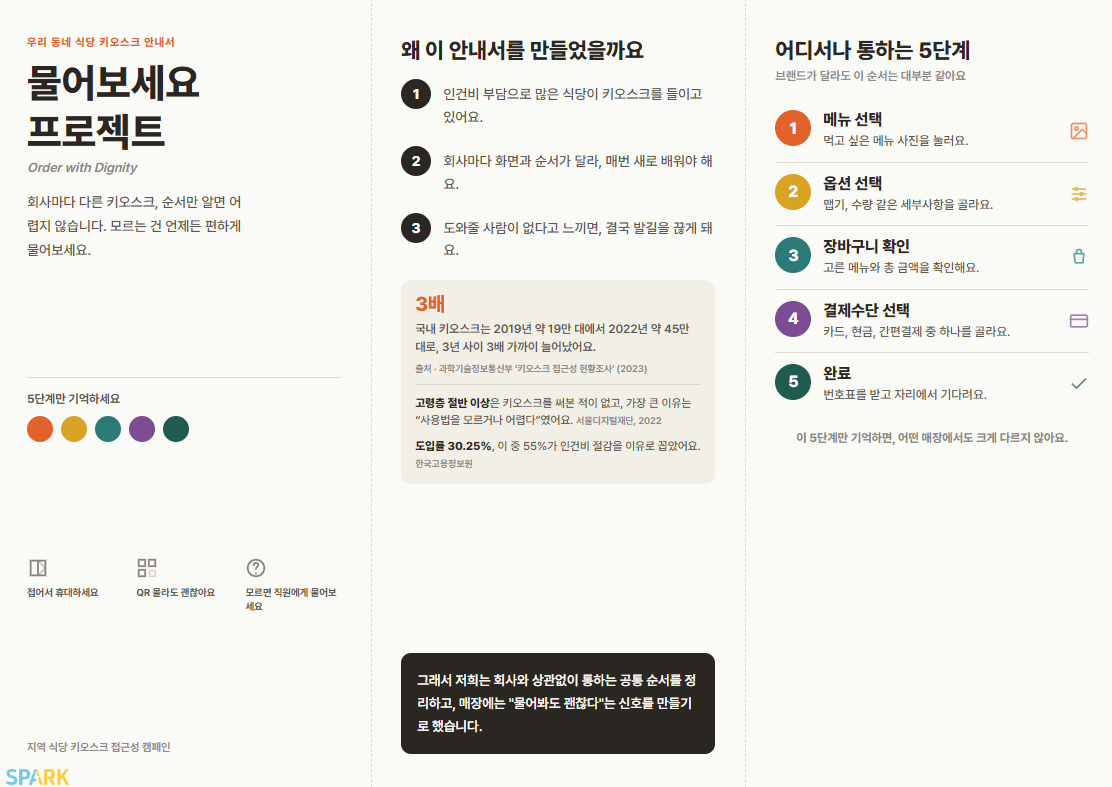
Restaurant kiosks tripled in Korea between 2019 and 2022, reaching 450,000 units — yet over half of elderly users report never having used one, citing unfamiliar interfaces and lack of assistance. I designed the "물어보세요 프로젝트" (Order with Dignity), a campaign that breaks kiosk ordering into five universal steps and trains restaurant staff to offer help proactively.
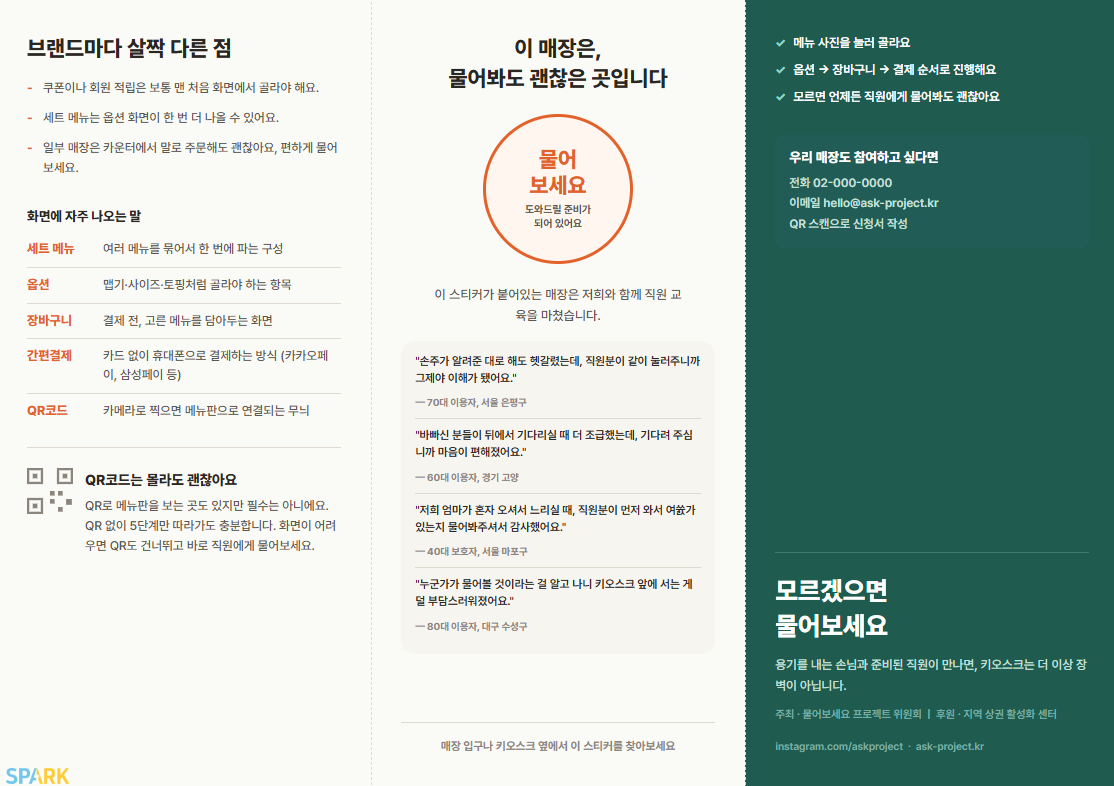
The campaign produces printed guides, in-store stickers signaling staff readiness to assist, and a staff training protocol — making it normal to ask for help at a kiosk instead of something to be embarrassed about. The project has grown into a community co-prosperity initiative, with over 400 restaurants and coffee shops nationwide participating — helping businesses reach digitally underserved customers while building local economic inclusion.
- Scaled to 400+ participating restaurants and coffee shops nationwide, growing into a local co-prosperity project that connects digitally underserved populations with neighborhood businesses
- Designed a universal 5-step kiosk guide that works across all major kiosk brands, lowering the barrier for elderly and first-time users
- Created the "물어봐도 괜찮다" sticker system — a visible signal that restaurant staff are trained and ready to help with kiosk orders
- Built staff training protocols and printed materials distributed to local restaurants, making assistance the norm rather than the exception
Vox Mundi — Youth Editorial Journal
Alongside local projects, I run Vox Mundi, S.P.A.R.K.'s editorial journal program across 10+ school branches. Each branch puts out monthly issues analyzing social and international issues, giving students a platform to sharpen their analytical writing and engage with global affairs beyond the classroom.
- Founded and serve as Editor-in-Chief of the Vox Mundi ROK Headquarters at KIS Jeju, overseeing the full publication cycle
- Expanded to 10+ school branches, managing a network of student editors producing analysis of global issues
From Local Blindness to Local Action
S.P.A.R.K. is built on the idea that youth civic engagement should start at the doorstep, not at the podium. Each project targets a specific community gap — linguistic exclusion, digital accessibility, historical erasure, cultural loss — and gets the same rigor I bring to policy research and international forums.
The Harvard Kennedy School partnership turned a student initiative into a contributor to an institutional research archive. The kiosk campaign reached local restaurants with tangible materials. The Jeju dialect project engages with a UNESCO-classified endangered language. These aren't simulations — they are real interventions with real stakeholders.